A Writer's Journal
November to December 2025

Friday 28 November
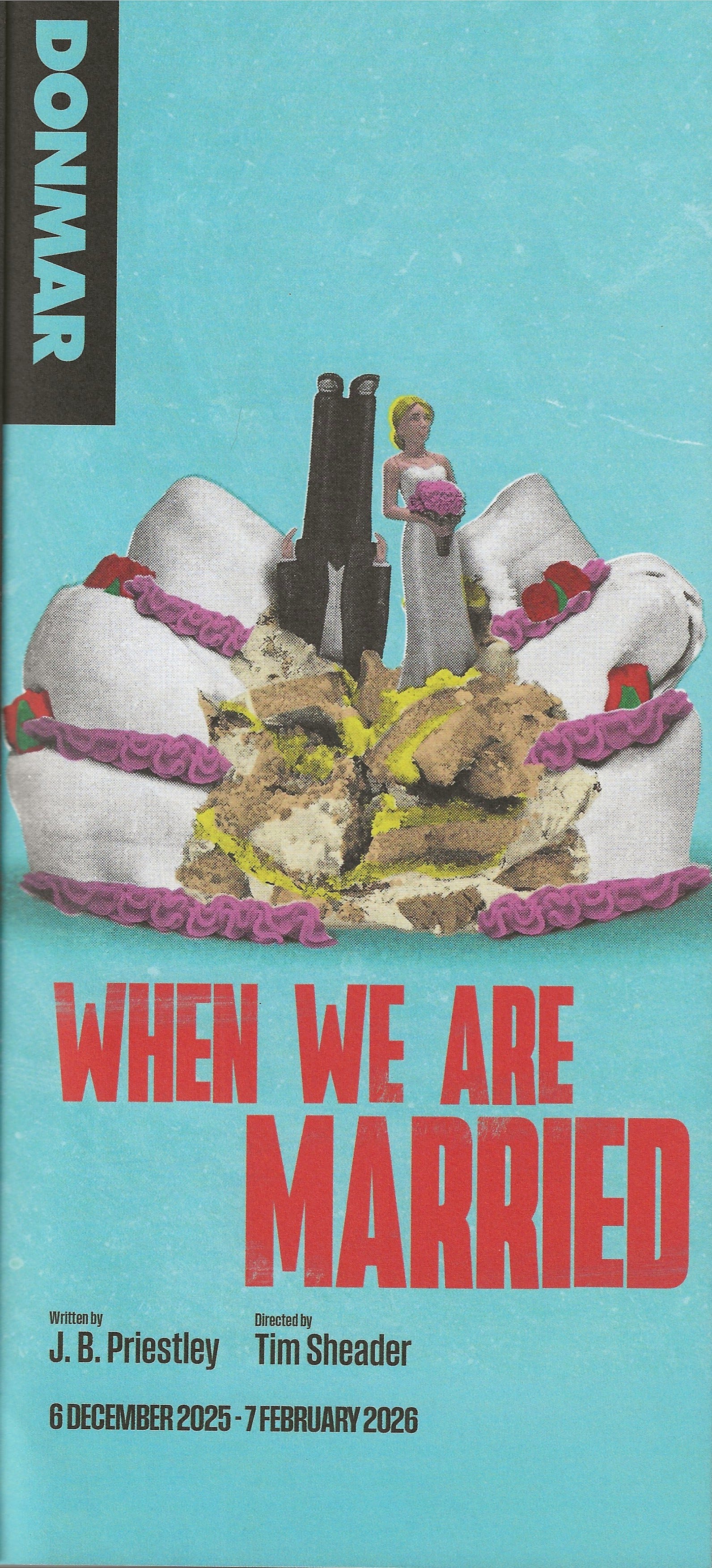
Gerard just got two tickets for Priestley’s When We Are Married at the Donmar! I’m so thrilled, he’d looked earlier and it had sold out, they must have had some returns.
I worked all day…I sent three chapters of the novel to a writing coach for an appraisal.
Thursday 4 December
Selling books at a local Christmas market. To my surprise, I did manage to sell a few.
Saturday 6 December
We went to Hawkesbury Literary Festival Christmas special. I enjoyed it – I didn’t do a talk this year so could just sit back and listen to everyone else while munching mince pies and drinking tea. A lovely mix of stories, readings and talks.
Monday 8 December
I picked up a copy of Neville Cardus’s Autobiography from the library, which I hope will have some passages on music hall. I just finished Lost Empires: A Music Hall Companion, an anthology of writing about music hall edited by Benny Green, and have put together a list of writers to look out for. Lost Empires was really interesting, I thought the extracts well chosen and fascinating.
I started Lorna Fergusson’s novel The Chase. Brilliant so far, gripping, moving, mysterious, eery.
Tuesday 9 December
We went to Tyntesfield to see the Christmas decorations. It was raining and windy, we crossed Clifton Suspension Bridge through a grey sky with pale grey sheets of rain flapping at us. The trees across the valley below Tyntesfield were a dull green against the grey, swaying in the blustery wind, and in their midst a sudden startling red-leafed tree with swirling branches.
The house looked lovely, it was decorated in fairy tale and story themes. I liked the Narnia room best, the doorway done like a wardrobe with hanging coats and you went through them into a grove of white-lit Christmas trees, and at the end of the room was the lamp post with Mr Tumulus’s scarf hanging on it.
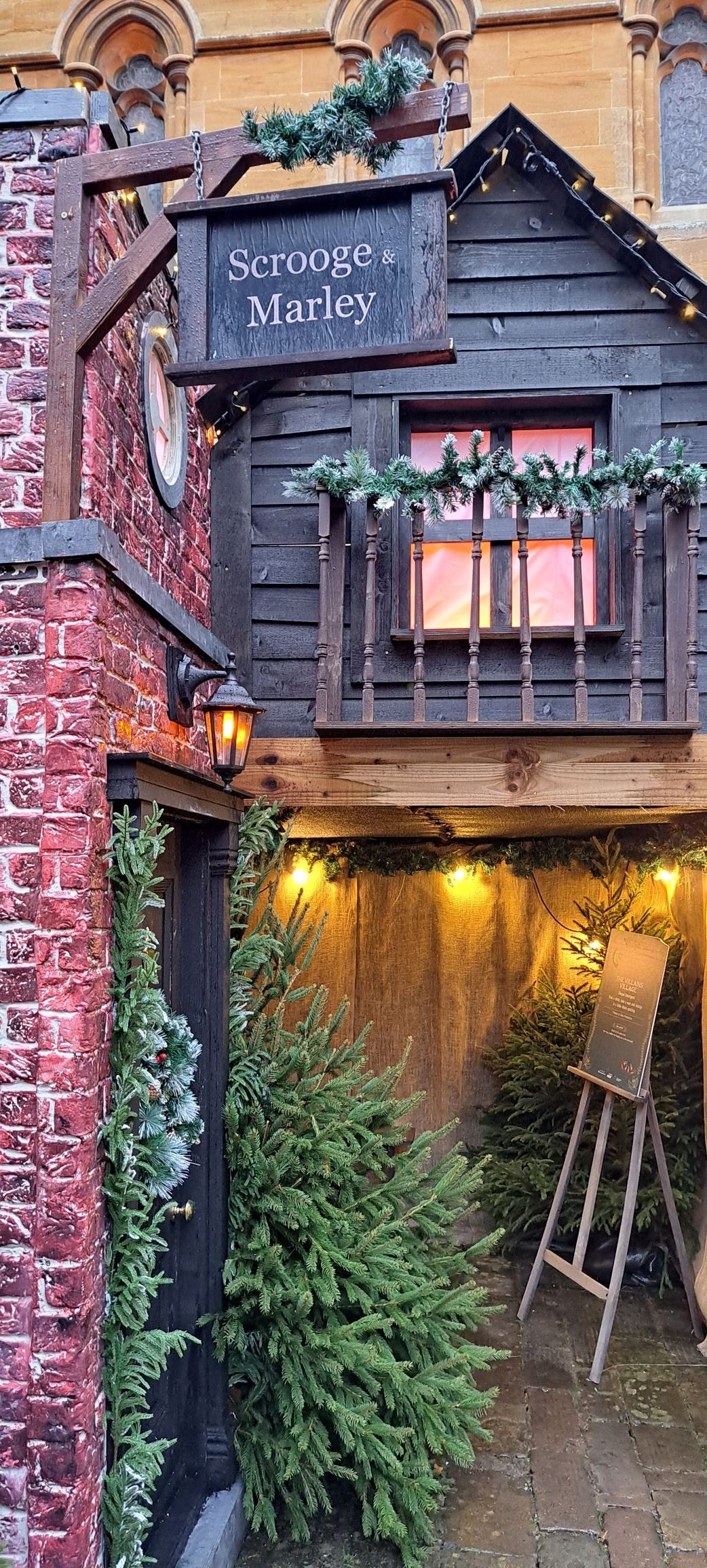
Spot the book at Tyntesfield…
Gerard said he had never read the Narnia books. A shocking revelation which must be put right.
Then we had lunch and I bought some presents in the shop.
I did a bit of writing when we got home.
Wednesday 10 December
I finished The Chase, I really enjoyed it.
I’ve nearly finished rereading Great Expectations. I find it a difficult read at times, it’s almost unbearable seeing Pip going on believing in his false hopes and deluding himself about Mrs Havisham and Estella. Worse still is the way everyone lets him – they all know, Jaggers, Mrs Haversham, Estella, but no one tells him, or even drops a hint. Joe is as bad, he never warns Pip about his day dreaming and leaping to conclusions. In fact none of the adults take really good care of him, they’re all self-obsessed and/or weak. Joe never protects him from his sister’s violence, though later he explains to grown-up Pip it was because if he had done she would only have laid into him worse when Joe wasn’t around. I wonder if other readers had commented on it and so Dickens felt he should account for it.
Anyway Pip is surrounded by careless adults who fail to protect him, some who even harm him, and the spectacle of him making a fool of himself and being made a fool of is horrible, and that he goes on in his Fool’s Paradise for so long when even a bit of common sense might have saved him the worst, at least suggested caution and not making assumptions.
Saturday 13 December
I’ve been rereading Wuthering Heights, not one of my favourite novels. The framing device (Lockwood as audience for Nelly’s narrative) is clunky and the end very lame. Heathcliff is a boring psychopath, a grotesque, I find nothing romantic about him, sad childhood notwithstanding.
For me the most interesting character is Nelly Dean. It’s not just that we are reliant on her version of events, but the way she also influences those events by her interference, telling or withholding information at crucial points, thus preventing action or inaction. We are forced into her point of view, and it’s an interesting and ambivalent one. What are her own feelings exactly? How much does her oft-stated dislike of Cathy bias her narrative? Does she really have any sympathy for Heathcliff? And is she really as powerless as she makes out?
The characters are all bonkers and unbelievable, Cathy and Heathcliff two supremely selfish and violent people whose so-called love is scarcely credible to me. So much cruelty to dogs too. There’s not one really redeeming character, even the “good” ones are insipid and weak – Linton in particular, another adult who fails to protect a child (which is a common theme in Dickens too). Linton could have settled money on his daughter years before he fell ill, years before Heathcliff forced her into her dreadful marriage, but he never does anything to to safeguard her future or to find her a suitable husband, never even hires a governess so that she might at least gain some small knowledge of life beyond the Grange. (Now imagine if Jane Eyre had had the looking after of her!)
But then I suppose if all characters exhibited common sense there would be no novels at all.
No, it’s not a novel I like. Dark, violent, brutal, sordid…and overwrought and melodramatic, yet with some very interesting themes and ideas in it. And there’s no denying the writing has power; there’s a vision at work here, an intensity that is quite compelling, and challenging in its moral ambiguity.
Friday 19 December
Yesterday we went to London to see When We Are Married. It bucketed with rain, the streets around Covent Garden were crowded with people under umbrellas, the streets awash, puddles deepening in the gutters. We had coffee and a cinnamon bun in an atmosphere of dripping umbrellas, steaming coats, soaked trousers, wet shoes. We went to the Donmar very early because it was too horrible to walk around, and we were cold and wet and miserable. Still, sitting in their little café area wasn’t all bad until someone put on some music, not bad music in itself, but so loud they could probably hear it in Leicester Square. After a few pounding moments it was turned down slightly, and we managed to get a pot of tea, so things looked up a little.
I went upstairs to the loo, saw they’d opened the stalls and asked the man on the door if we could go in, and if it was quiet in there. Yes, we could go in, and yes it’s quiet, he said.
He lied. They were playing loud music. A medley of music hall this time, very apt for Priestley of course. Since it was impossible to read (I’d started Priestley’s Wars by Neil Hanson on the train – extracts from letters and articles), we passed the time by trying to identify the songs and looking up details about them on Gerard’s phone.
The play was wonderful, funny right from the start, and very cheering after the horrible cold dampness of the journey. Priestley’s usual delight in exposing hypocrisy, shaking up his characters’ lives, then restoring them to something like normality again. I like the Donmar, it’s so small, so lovely to see a play in a space like that. We were in the second row of the stalls, wonderful seats.
After the play I went to the loo again, after the usual queuing I rejoined Gerard who told me he’d just seen and spoken to Ron Cook, told him we enjoyed the play and also mentioned how we’d loved A Jovial Crew at the Barbican (I think) many many years ago (with music by wonderful Ian Dury). In fact, A Jovial Crew is still one of the best things I’ve ever seen, for me it’s one of those plays I remember for ever – we saw it twice.
“Oh, I wanted to see him!” I wailed jealously, and stupidly, because if I’d thought about it of course I didn’t, it would only be embarrassing. And it was. For there he was, on the stairs, leaning over the banisters either looking for or talking to someone below. So I did manage to mutter “Loved the show” as I went by and he said thank you, and I wanted to say I’d loved A Jovial Crew but luckily I didn’t because I’d been stupid enough by then. I expect actors get so fed up of people coming up to them, it must seem very tedious and gauche and intrusive – but then they shouldn’t come out of their dressings rooms and walk around mingling with the crowds like ordinary people…
So back to the tube station in the dark and the rain, all lit up by shops and lights and cars and buses, what felt like thousands of people, and the sounds of splashing, swishing water, many voices, someone saying in Dutch that they’d enjoyed a meal at a restaurant (it was lekker), sirens going, the usual London cacophony or symphony.
Then we caught the train back to Bristol which had to be diverted because of flooding on the line so we were late home. It was still wet and cold and I was very tired, but I had enjoyed the play.
I gave up on Neville Cardus’s Autobiography, some of it was interesting but the cricket bored me and the more I read of the music criticism the more pompous and pretentious it felt. I finished rereading They Knew Mr Knight, Dorothy Whipple. Wonderful of course.